
The Importance of Treating the Cause, Not Just the Symptoms
Many people feel frustrated when their varicose veins reappear after undergoing treatment. This does not necessarily mean that the procedure was unsuccessful. In many cases, only the visible veins were treated, while the underlying cause of the disease remained unresolved. That is why consulting a varicose vein specialist is the first step toward obtaining an accurate diagnosis and a truly effective treatment.
The Great Saphenous Vein: The Source of Many Cases of Venous Insufficiency
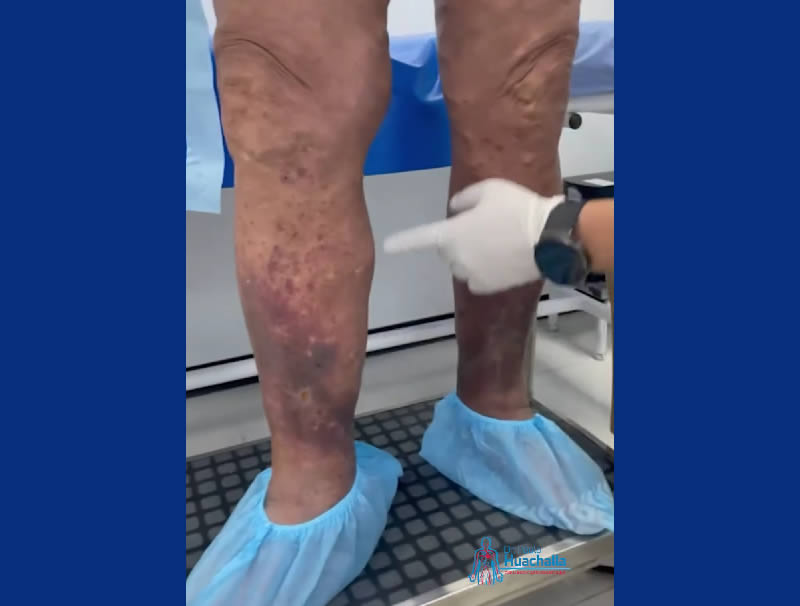
The great saphenous vein is one of the main veins in the legs. When its valves stop functioning properly, blood flows backward, increasing pressure within the venous system. This condition gradually leads to the development of varicose veins, spider veins, a feeling of heaviness, swelling (edema), skin discoloration, and, in advanced cases, venous ulcers.
Before starting any procedure, it is essential to determine whether the great saphenous vein is affected. An evaluation performed by a cardiovascular surgeon makes it possible to identify the source of venous insufficiency and recommend the most appropriate treatment for each patient.
Why Don’t Some Treatments Prevent Varicose Veins from Returning?
When treatment is recommended without a venous Doppler ultrasound evaluation, the results are often less effective because the underlying causes of the varicose veins have not been assessed. In many cases, we have seen patients undergo sclerotherapy without a prior Doppler examination. While this treatment delivers excellent results for eliminating spider veins and superficial varicose veins, it does not address the underlying problem when great saphenous vein insufficiency is present.
In situations like these, the treated veins disappear, but new varicose veins may develop over time because the primary cause remains active. For this reason, varicose vein treatments should focus on correcting both the visible symptoms and the underlying venous disease.
Comprehensive Treatment for Venous Insufficiency
Modern varicose vein treatment focuses on resolving venous insufficiency at its source. Through a clinical evaluation and a venous Doppler ultrasound, the affected vein can be identified and the most appropriate treatment plan can be developed.
This comprehensive approach slows the progression of the disease, relieves symptoms, and reduces the risk of future complications. If you would like to learn more about our treatments and procedures performed by a physician recognized by many colleagues and patients as the best cardiovascular surgeon in Lima, you can expect an accurate diagnosis and a treatment plan focused on the underlying cause of venous insufficiency, achieving long-lasting improvements in both leg health and appearance.