
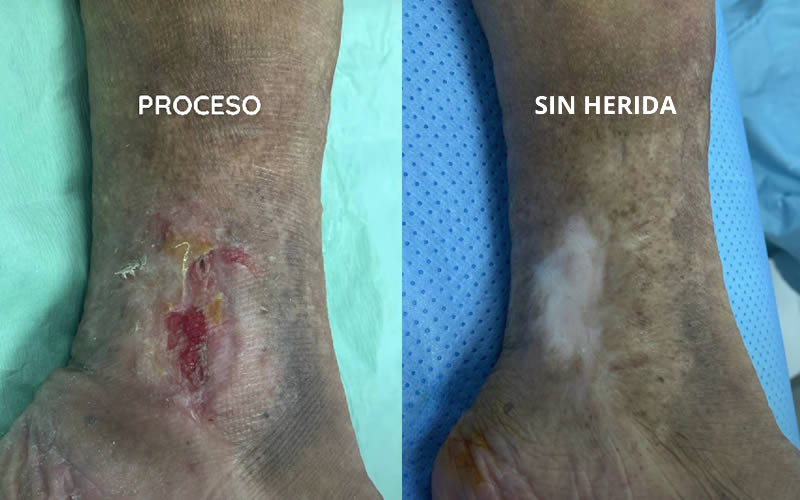
How Should a Venous Leg Ulcer Be Treated?
Venous leg ulcers are wounds that develop on the lower part of the leg in people with chronic venous insufficiency. These wounds fail to heal properly and are a visible consequence of advanced venous disease. Therefore, successful treatment requires consultation with a vein specialist, who in Peru is typically a Cardiovascular Surgeon.
Contents
- What is a venous leg ulcer?
- What causes venous leg ulcers?
- What are the symptoms of venous leg ulcers?
- How are they diagnosed?
- How should a venous leg ulcer be treated?
- Home care for a successful recovery
What is a venous leg ulcer?
It is an open wound that usually appears on the lower part of the leg, near the ankles, where the skin is thin and sensitive. When a patient has advanced venous insufficiency and the vein valves in the legs fail, blood does not properly return to the heart, causing increasing pressure in the lower extremities.
This situation leads to leg discomfort and swelling. As the condition worsens, the skin breaks down and opens, becoming a wound known as a venous leg ulcer. This wound is difficult to heal and requires evaluation by a specialist.
What causes venous leg ulcers?
The main factors that contribute to the development of venous leg ulcers are:
- Advanced varicose veins.
- Deep vein thrombosis.
- Spending many hours standing or sitting.
- Obesity and excess weight.
- Advanced age.
- Lack of physical activity.
- Hereditary factors.
If you would like to learn more about the progression of venous disease, you can visit our page where we present some photos of varicose veins as well as videos of our varicose vein treatments.
What are the symptoms of venous leg ulcers?
Venous leg ulcers usually develop gradually. Before the wound appears, patients commonly experience several symptoms related to venous insufficiency:
- Swelling in the legs and ankles.
- A feeling of heaviness or fatigue.
- Pain or discomfort when standing for long periods.
- Changes in skin color.
- Persistent itching or irritation.
- Hardened skin around the affected area.
- Wounds that take weeks or months to heal.
How are they diagnosed?
The most appropriate and accurate way to diagnose a venous leg ulcer is through a physical examination and a venous Doppler ultrasound, both performed by a specialist. Early identification of venous insufficiency helps prevent the development of ulcers.
However, in cases where the ulcer is already present, the venous insufficiency must be treated first in order for the wounds to heal. Being evaluated by a specialist or visiting a specialized varicose vein clinic ensures that the patient receives proper care.
How should a venous leg ulcer be treated?
Treatment of a venous leg ulcer must address the root cause of the problem, namely venous insufficiency. It should also be comprehensive and include:
- Evaluation and diagnosis by a specialist.
- Doppler ultrasound to determine the affected vein.
- Endovenous ablation to eliminate the underlying problem.
- Wound care and management.
Home care for a successful recovery
Following medical treatment, which is the primary approach to managing this condition, patients should follow certain recommendations to avoid wound infection:
- Maintain proper hygiene.
- Change dressings regularly.
- Wear compression stockings.
- Avoid impacts or strenuous physical activities.
- Moderate physical activity helps recovery.
- Avoid excess weight.
- Maintain a healthy diet.
If you have a venous leg ulcer, we recommend seeking specialized care from the most appropriate physician, a cardiovascular surgeon, who can determine the location and cause of your venous insufficiency and provide the most appropriate treatment for your case.
If you are in Peru, we recommend visiting us and being treated by the physician considered by many colleagues and patients to be the best cardiovascular surgeon in Lima, Dr. Paulo Huachalla Coronel.